
Glyphosate is a broad spectrum herbicide which interferes with the growing point of the plant. It’s absorbed best through leaves rather than roots, and must be used only when the plant is actively growing. Glyphosate is available under a range of brand names, and is the most common form of herbicide in NZ.
Compared to other herbicides, glyphosate is bound into the soil (meaning it’s less affected by leaching or run-off) and is broken down by microbes in the soil. The speed of the break down depends on the activity of microbes (faster when warmer), and can take between a few days and a few weeks.
Be aware that glyphosate is not specific to one plant species, so be careful around plants you don’t want to kill.
How to spray
This method uses a standard concentration of 100mL/10L Glyphosate (360g/L) mixed with a penetrant, but READ THE INSTRUCTIONS ON THE LABEL. Some brands include a penetrant already. Use the concentration recommended for spot spraying, not aerial spraying.
- Spray only when the weeds are in good health and actively growing with plenty of leaves (ie: not winter, not directly after mowing/slashing etc).
- Avoid spraying when there are bees on the plants as they will be affected by the spray.
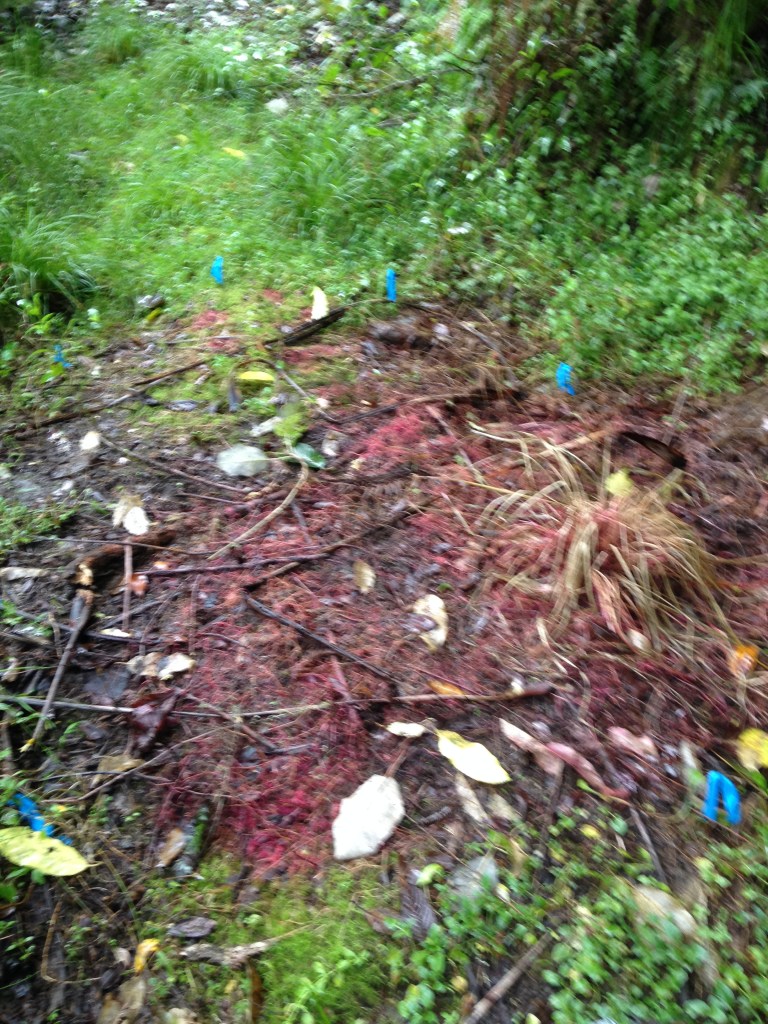
- Mark the extent of the infected area so you can revisit and check for continued spread. Flagging tape on bent wire pegs works well for weeds at ground level. Dye is useful for wider areas.
- Follow up after your first round to check that the weed has been killed and that all plants have been covered. The uptake of poison will depend on how quickly the plants are growing.
 Thames Environmental Alliance